
Grandparents as Mentors: Small Shifts, Lasting Impact
You're already shaping who your grandchild is becoming; the question is whether you're doing it intentionally. Guest writer Melissa Richardson spent three decades designing workplace mentoring programs. When her first grandchild came along, she recognized that the same principles that help people grow at work apply to grandparenting—and she can show you exactly how to use them.
Like many new grandparents, my first steps as a grandmother were tentative. At first, the role seemed simple: love them, enjoy them, and support exhausted parents whenever I could.
As my grandchildren grew, however, a much bigger question emerged. What kind of world are they growing into?
When our own children were small, it was tempting to think that the future would look very similar to today. Yet, now I can’t help but wonder, what kind of world will our grandchildren inherit? Artificial intelligence, climate change, political instability, declining mental wellbeing and rapid technological change. The list of disruptions and concerns gets longer each year.
Children are growing up in a world none of us can predict. We can’t protect them from every challenge, nor can we future-proof them against every disruption. But as grandparents, we can be intentional about the unique role we play in their lives and intentionally strengthen the qualities that will enable them to navigate whatever lies ahead.
In my professional life I spent three decades designing and managing workplace mentoring programs and educating managers and leaders in the art of mentoring. Mentoring in a work context involves helping a less experienced person become who they want to be and achieve what they seek – whether that’s career success, work satisfaction or this year’s goals. Often, it’s about supporting them as they navigate the obstacles and complexities of organizational life.
It wasn’t until my first grandchild was about eight years old that I realised I was missing an opportunity. I knew how powerful mentoring could be in workplaces, yet I hadn't recognised that the same developmental principles belonged just as naturally in grandparenting. Mentoring isn't a just program or a formal relationship. It's a way of helping another person grow and develop qualities that will enable them to navigate the world.
That's when something clicked for me. If mentoring is simply helping another person grow into who they can become, then every grandparent is already mentoring. The question is whether we're doing it intentionally.
I began to look for ways to transfer what I know about mentoring into the way I interact with my grandchildren. I am now much more deliberate about how I show up as a grandparent. Here are five everyday shifts that can shape who your grandchild becomes.
Small Shift #1: Resist the Urge to Rescue Your Grandchild
When a child struggles, the instinct is to rescue. But doing it for them doesn’t create learning. The mentoring response is to strengthen the child’s ability to do it for themselves. You can ask questions to guide them to a solution – and they will have the satisfaction of working it out. It also builds their sense of self-efficacy for future problem-solving.
Small Shift #2: Help Your Grandchild Reflect on Their Experiences
Last weekend, we took our grandkids to see Toy Story 5. It kept them entertained for the duration, but the real gold was in the discussion about the movie on the way home. The 10-year-old wanted to discuss the moral of the story – which is essentially about the dangers of kids having too much screentime. He asked what we thought the lesson of the movie was, but instead we asked for his thoughts. Helping children reflect on an experience by holding space for them to think out loud and asking thought-provoking questions helps them take a general concept (screentime is bad) into real life. He noted that it was actually much more fun playing soccer and spending time with friends, than zoning out in online games. Even at 10, he is able to articulate how addictive he finds screens and how much he wants to resist them. The conversation strengthened his resolve to spend more time outdoors and with friends and family.
Small Shift #3: Do Things Together That Build Your Grandchild's Confidence
When we cook with grandchildren, we are not only creating beautiful memories, but we are helping them develop capabilities – like goal-setting, planning, measuring, patience and confidence in the kitchen. Capacity building is very much a mentoring role.
Grandchildren rarely remember the recipe. They remember that someone believed they were capable of making it.
Small Shift #4: Ask Your Grandchild Powerful Questions
A powerful question is one that has a strongly positive impact on the quality and direction of a person’s thinking. Here are some for your toolkit:
To encourage creativity and curiosity: “If there were no rules, how would you reinvent this (game, object, task)?”
To support resilience: “When things feel hard, how could you remind yourself about how strong you are?”
To help them cope with uncertainty: “What are some things that haven’t changed, even though other things have?”
Small Shift #5: Be Fully Present and Really Listen
One of the greatest mentoring gifts we can offer is our full attention. Active listening means listening not only for the words, but also for the feelings underneath them. It means resisting the urge to interrupt, offering thoughtful questions instead of quick solutions, and helping grandchildren unpack their own thinking. When children feel deeply heard, they also begin to hear themselves more clearly.
You Don't Need to Do More—Just Be More Intentional
None of us knows what the future will bring for our grandchildren. But we do have influence over the people they are becoming.
You don't need another activity or another parenting strategy. You simply need to begin seeing yourself not only as someone who loves your grandchildren, but as someone intentionally helping them develop the confidence, character and capabilities they'll draw on for the rest of their lives.
Love makes you a grandparent. Intention helps you become the grandparent your grandchildren need.

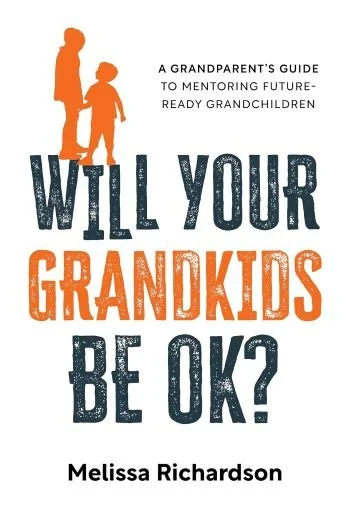
Melissa Richardson is a mentoring expert, researcher, writer and grandmother who has spent more than 30 years designing mentoring programs and teaching people how to become effective mentors. Concerned about the world today's children will inherit, she began exploring the unique role grandparents can play in helping younger generations flourish in uncertain times. Her work brings together mentoring practice, developmental psychology, resilience research, and intergenerational wisdom to help people remain grounded, connected, and capable during times of uncertainty and change. Her book, “Will Your Grandkids Be OK?", is available on Amazon
You May Also Like: