
Cooking with Your Grandchildren: A Guide for Toddlers and Preschoolers
The kitchen is one of the most powerful places to connect with your grandchildren (and one of the most memorable for them!). Here's how to make cooking together safe, fun, and age-appropriate from the very first visit.
Whenever I ask my readers what they remember most about their grandparents, a remarkable number of them will mention the kitchen. The smell of banana bread baking. The family recipe for lasagna being passed down. Sprinkling sugar on the leftover bits of pie crusts. The details are as individual as the people in the kitchen, but they always start when grandparents are cooking with their grandchildren from an early age.
The kitchen has a way of making itself into a memory, which is exactly why cooking with grandchildren is one of the best investments you can make in those early toddler and preschooler years. The giggles, the mess, and the joy of creating something together can forge a bond that lasts a lifetime. But before you get out the mixer, read on for some tips on how to make the experience as enjoyable as possible.
I may receive a commission for purchases made through the affiliate links in this post at no additional cost to you. Thank you for supporting More Than Grand.
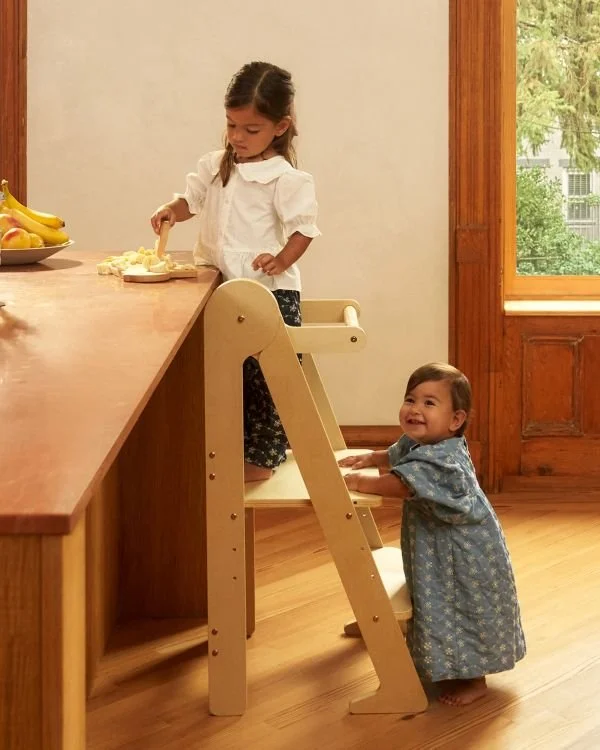
Before you start: setting up a safe kitchen for grandchildren
Safety is paramount when cooking with toddlers and preschoolers. Before starting your culinary adventures, make sure the kitchen is a safe space for your grandchild. Set up a designated area for your little chef with a non-slip step stool or cooking tower so they can easily reach the countertop—I know from personal experience that a child can manage to topple even the sturdiest of kitchen chairs or stools. Keep sharp knives away from the area where they'll be working, and provide constant supervision.
What toddlers can do in the kitchen (ages 2–3)
Toddlers are enthusiastic helpers, but their coordination and attention spans are still developing. At this age, keep it simple and sensory. Washing fruits and vegetables, tearing lettuce, pouring pre-measured ingredients into a bowl, and stirring are all entertaining to a two-year-old. Resist the urge to measure together just yet: toddlers are much happier when the pressure of getting it right is off.
The goal at this stage is to make the kitchen feel like a welcoming, exciting place.
What toddlers can do in the kitchen (ages 2–3)
Simple tasks, big satisfaction — no measuring required.
- Washing: Rinsing fruits and vegetables under running water
- Tearing: Pulling apart lettuce leaves or fresh herbs
- Pouring: Tipping pre-measured ingredients into a bowl
- Stirring: Mixing ingredients in a large bowl with a big spoon
- Best recipes: No-bake, no-measure — fruit skewers, yogurt parfaits, trail mix
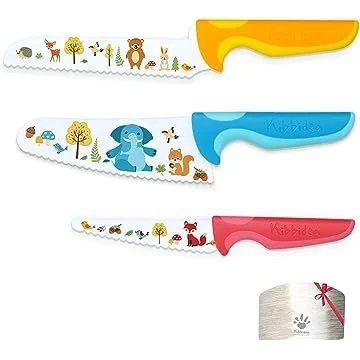
Kid-friendly cooking tools will spark their curiosity and make the process more engaging. You'll find a full list of kids' kitchen equipment in our Amazon shop.
What preschoolers can do in the kitchen (ages 4–5)
Preschoolers are ready for more. They can handle measuring with supervision, mixing thicker batters, spreading, rolling dough, and using kid-safe knives that cut food without cutting little fingers—you'll find options like these in our Amazon shop, along with a full list of recommended kids' kitchen equipment.
What preschoolers can do in the kitchen (ages 4–5)
More capable than you might expect — and ready for real recipes.
- Measuring: Scooping and leveling dry ingredients with supervision
- Mixing: Stirring thicker batters and doughs
- Spreading: Butter, cream cheese, or peanut butter on bread or crackers
- Rolling: Cookie dough, biscuit dough, play-style pasta
- Cutting: Soft foods like bananas and strawberries with a kid-safe knife
- Best recipes: Simple baked goods, sandwiches, homemade pizza — anything with steps they can follow
This is also the age when following a simple recipe becomes genuinely exciting. Let them choose from a kids' cookbook like Bluey and Bingo's Fancy Restaurant Cookbook. Using the stove can wait until you're confident they're reliably good about following directions, but preschoolers can absolutely help with everything that leads up to it.
The best cooking activities to start with
Cooking adventures with little ones don't have to be complicated. Cutting, spooning, pouring, and mixing are easier when you don't have to measure, so no-bake and no-measure recipes are a great place to begin at any age. As your grandchild gets older and more confident, you'll want to pass on favorite family recipes. These are a powerful link between generations, and they are the recipes they'll still be making as adults.
How cooking with grandchildren supports their development
Cooking offers a wealth of learning experiences for toddlers and preschoolers. Counting and measuring ingredients builds numeracy skills. Naming and identifying various foods broadens vocabulary, and talking about colors and textures tickles their curiosity.
Cooking is also a great way to explore new foods. Food is not just about taste! Encourage your grandchild to explore ingredients using all their senses. From feeling the smooth skin of an apple to smelling aromatic herbs, cooking is a multi-sensory adventure. And children who help prepare food are far more likely to try what's on their plate, which makes mealtimes easier for everyone.
Read more about why that matters in What Grandparents Need to Know About Food Neutrality.
Embrace the mess while you're at it. Cooking with young children always involves some spills and drips; once you accept that, it's easier to enjoy the process. Involving your grandchild in the cleanup can also be part of the experience. The memories you'll create together are worth every bit of it.
Passing down family recipes: the most powerful kitchen tradition
Even as adults, my children still look forward to making Christmas cookies with their Yaya. That's what a family recipe can do. When your grandchild is old enough to tackle more demanding dishes, the recipes you cook together become a direct link to the people and stories behind them. Those are the moments that turn into memories, and the memories that get passed on.
Food is what ties families together, and spending time cooking with your grandchild is a delicious way to deepen your bond. Your culinary adventures don't have to end in the kitchen, either. Plant a small herb or vegetable garden together and let them help tend it, then use what you grow. Visit a local farmers' market and let them choose one new ingredient to try. Check out food-themed picture books like Bee-Bim Bop! or Fry Bread that celebrate cooking and family in ways that stick with young readers.
When it comes to grandchildren and food, the kitchen is just the beginning.
You may also like: