
Holiday plans get complicated when you become a grandparent and your adult children have competing priorities. Learn when to start the conversation about celebrations, what to say, and how to share the season with the other grandparents. You can be part of the holidays even in the years you don’t get the big day.
Carol found out about her son’s Thanksgiving plans from the other grandmother. The two of them were standing by the cake at their granddaughter’s first birthday party when Pam mentioned how excited she was to have everyone at her house in November. Carol smiled, said it sounded lovely, and drove home wondering why her son hadn’t told her. She’d been waiting for him to bring it up, while he’d assumed his wife had mentioned it.
If you’re sharing the holidays with the other grandparents, you probably know what Carol was feeling. In our reader survey this month, about 20% of the grandparents who responded described tension with the other side of the family, and the holidays came up again and again. Most weren’t asking for more time. They wanted to know how to bring up holiday plans without seeming pushy, and what to say when the answer isn’t the one they hoped for.
Should you ask about holiday plans or wait to be invited?
One reader described the dilemma perfectly. They worried that if they extended an invitation, it would look like pressure. But they were afraid if they waiting for their kids to decide and passively followed their lead, it would look like they didn’t care. Which should you do?
Ask. Waiting feels like the polite choice, but silence leaves your adult children guessing. They may assume you have other plans, that you’d rather not travel, or that you’ll be fine with whatever they decide. Then you hear the plan secondhand, the way Carol did, which hurts more than a direct “not this year.”
A clear, kind request gives parents something they need, too. They can’t include you in plans they don’t know you want to be part of.
I learned this from my father. My older sister and I got married the same year, and he told us he didn’t expect us to come home for Christmas every year. He asked that we try to come every other year, and that we both come the same years, so the whole family could be together. He didn’t make us feel guilty about the other years. He told us what he hoped for and why, and that clear expectation made planning easier for all of us.
Your request can work the same way. Say what you hope for, keep it reasonable, and explain why it matters to you.
How to ask your adult children about holiday plans
Three things make it easy for parents to give you an honest answer.
Ask early. Plans fill up fast once one side of the family asks. If you haven’t asked yet this year, ask this week.
Ask both parents. If your grandchild’s parent is your son, include your daughter-in-law, and if it’s your daughter, include your son-in-law. That way no one has to relay your request to their partner.
Offer choices and an easy out. A single, specific request (“Will you come for Christmas?”) puts parents in the position of saying yes or disappointing you. A few options and a clear exit let them choose what works.
Try something like this:
“We’d love to see you sometime over the holidays. Would Thanksgiving weekend, a day before Christmas, or New Year’s work better for you? We’re flexible.”
“If your plans are already full this year, just tell us. Maybe we could celebrate one weekend in January instead.”
“Would it be easier if we came to you? We know traveling with a baby is a lot.”
Packing for a baby or toddler is hard work, and many young families would rather stay put. For more on what young families juggle this season, see what parents want grandparents to know about holiday celebrations.
Splitting holidays between grandparents: what’s fair?
Readers asked whether the grandparents who live closer should host more often, or whether every holiday should be split down the middle. There is no single rule. Some alternate years, so one side gets Thanksgiving and the other gets Christmas, then they switch. Some split the day itself, with Christmas Eve at one house and Christmas morning at another. Many parents of young children stay home and invite grandparents to come to them.
From your adult children’s point of view, “fair” usually means whatever their little ones can handle without a meltdown. Nap schedules, car seats, and a baby who won’t sleep in a strange room shape holiday plans more than anyone’s feelings do.
If your grandchild is your son’s child, you may notice the balance tips toward the other side more often than not. Our look at what research shows about the maternal grandmother advantage explains why this pattern shows up in so many families. One reader put it well: there are practical and normal reasons for the imbalance, she understands them, and she still feels sad. You can feel both things at once. If jealousy is making that harder, our guide to competing with the other grandparents offers ways to let go of the scorekeeping, including a section on the holidays.
What to say when the other grandparents get the holiday
When the plans don’t include you, give yourself a day before you respond. Then answer with an offer:
“Thanks for letting us know. We’ll miss you on Thursday. Could we plan a dinner the weekend after?”
“That sounds like a fun day for the kids. Would you send us a photo or two on Christmas morning? We’d love to see them in their pajamas.”
If you found out secondhand, resist the urge to bring it up in the moment. Wait until you can ask calmly, and focus on next time:
“Pam mentioned you’ll be at her house for Thanksgiving. That sounds lovely. Next time, would you let us know your plans when you make them? It helps us plan our own holiday.”
If the season still doesn’t go the way you hoped, these ideas for handling holiday disappointment can help.
Start a holiday tradition on a different day
A celebration that belongs to your family takes the pressure off the big days.
Linda lives twelve hours from her grandchildren, and the other grandparents live in the same town. She started a winter weekend at her house the first Saturday in January. Her grandchildren sled down the hill behind her house, make hot chocolate with too many marshmallows, and decorate gingerbread houses. Her grandchildren talk about it all year, and it makes Christmas easier for everyone.
Your version might be a pie-baking Saturday before Thanksgiving, a holiday lights drive the week before Christmas, or pancakes on New Year’s Day. It might even be a different time of year, like Memorial Day weekend or the Fourth of July. For more ideas, start with these holiday traditions to begin with your grandchildren.
Plan the conversations before the season starts
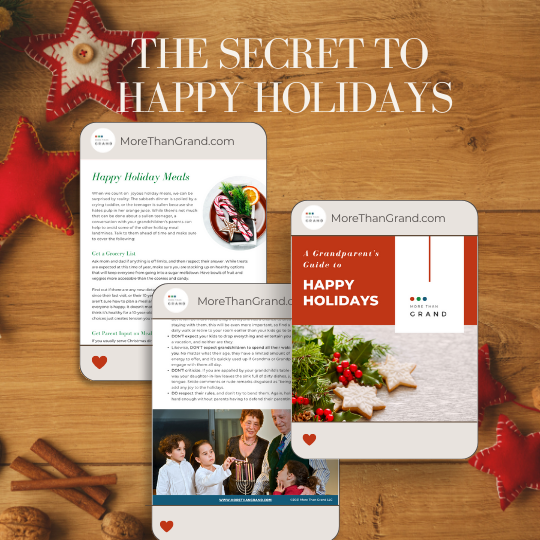
Navigate the holidays with confidence, not confusion
No matter how excited you are, you still may be uncertain about visits, gifts, and family traditions. New grandparents are often worried about overstepping or missing precious moments with your grandchildren.
A Grandparent's Guide to Happy Holidays gives you the clarity and tools to navigate changing family dynamics—whether you're hosting or visiting:
BEFORE the holidays:
Have the 3 conversations that make holidays go smoothly (most grandparents skip these!)
Navigate visits smoothly with do's and don'ts for going there OR hosting them here
Set up gift systems that respect parents' wishes and prevent tension
DURING the holidays:
Get help without feeling guilty about asking
Stay flexible when plans change (and they will)
Create harmony by knowing exactly where you fit in
AFTER the holidays:
Feel connected, not resentful
Have systems you can reuse next year
Complete organizational toolkit included: Meal planners, gift trackers, budget sheets, helper assignments, and a "My Favorite Things" family questionnaire. Everything available in Excel and Google Sheets.
Navigate family dynamics with confidence and create the harmony you're hoping for.
This is a digital product and can be downloaded immediately upon purchase. Nothing will be mailed to you.
Sharing the holidays with the other grandparents goes more smoothly when you talk with your adult children early, offer options instead of expectations, and ask for the information you need directly. You may not get every holiday, but you can still be a part of your grandchild’s life.
If you’d like help planning those conversations, A Grandparent’s Guide to Happy Holidays walks you through the three conversations that make holidays go smoothly, with do’s and don’ts whether you’re hosting or visiting. It also includes meal planners and gift trackers you can reuse next year. Get instant access and start this season with a plan.